
Medical Pedicure & Specialized Foot Care in Rockville, MD
Advanced Restorative Care for Complex Foot Concerns
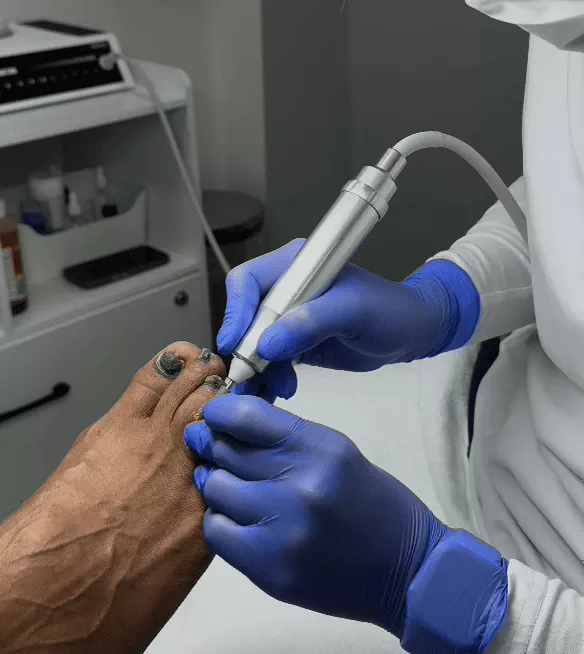
Standard pedicures are meant for aesthetic maintenance, but what happens when you have stubborn issues that a regular salon cannot safely manage? Our Medical Pedicure is an advanced, restorative protocol designed to address complex foot concerns in a waterless, sterile setting.
Whether you are dealing with painful calluses, severe peeling skin, drastically thickened or visibly damaged toenails, deep cracked heels, or ingrown nail discomfort, our certified specialists use precision e-file hardware to care for your feet safely. You receive thorough, hygienic care while enjoying a soothing and rejuvenating experience.
Targeted Solutions We Provide
- Thick & Damaged Nail Reduction: Safely thinning bulky nails for comfort and proper growth. See toenail fungus solution.
- Severe Callus & Corn Removal: Painless mechanical reduction of hardened skin buildup.
- Cracked Heel Restoration: Smoothing deep fissures to support healing. Learn more.
- Ingrown Nail Relief: Careful trimming and edge clearing to ease immediate pressure. See toenail braces.
The Restorative Protocol
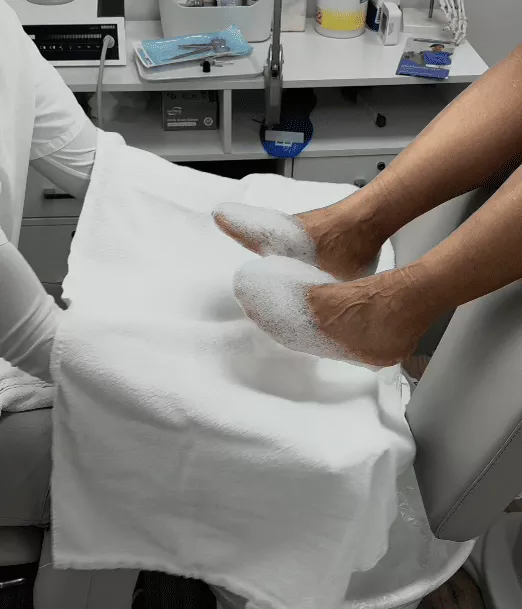
Complexity Assessment
We evaluate the severity of your calluses, cracks, and nail thickness to determine the specific e-file bits and topical softeners required.
Advanced Hardware Care
Using specialized techniques, we methodically clear away dead tissue, reduce nail volume, and smooth jagged heel fissures without causing pain.
Intensive Rejuvenation
After the structural work is complete, we apply specialized serums and deeply hydrating creams to support the skin's natural elasticity and protective barrier.
Beyond Aesthetics: Caring for Severe Foot Conditions
A Medical Pedicure is a non-invasive, highly technical cosmetic service that bridges the gap between standard salon pedicures and clinical foot care. We specialize in the safe mechanical reduction of compromised, non-viable tissue, bringing immediate cosmetic relief and comfort with every step.
Severe Calluses (Hyperkeratosis)
Heavy callus buildup isn't just unsightly; it can alter biomechanics and cause burning pain. We use specialized diamond and ceramic e-file bits to gently reduce dead skin layers without triggering the body's defensive response (which causes calluses to grow back thicker).
Deep Heel Fissures (Cracked Heels)
When dry skin splits, it creates an opening that can let bacteria in. We carefully process the edges of deep fissures so the skin can close more naturally, followed by intensive occlusive moisture barriers.
Thickened Toenails
Whether caused by trauma, aging, or fungal nail issues, overly thick nails cause painful shoe pressure. We safely reduce the bulk and thickness of the nail plate, restoring a natural appearance and relieving toe pressure quickly.
The Danger of Traditional Salon Methods
If you have complex foot issues, visiting a standard nail salon can make the problem worse. Traditional methods often rely on aggressive techniques that damage living tissue. At MedPedicure Center, we strictly avoid:
- Credo Blades ("cheese graters"): Cutting calluses with blades often removes healthy tissue, leading to cuts, infections, and accelerated callus regrowth.
- Harsh chemical peels: Acidic callus removers cannot distinguish between dead skin and healthy tissue, which can cause chemical burns, especially on diabetic feet.
- Aggressive cuticle cutting: We preserve the eponychium (the protective skin seal at the base of your nail) to help prevent bacterial entry.
Medi-Pedicure vs. Podiatrist Visit: Who Does What
A medi-pedicure is the cosmetic restorative tier — focused on appearance, comfort, and the conditions that come from years of neglect or poor salon care. A podiatrist is a licensed physician who diagnoses and treats foot disease. We exist in different parts of the same problem, and most clients eventually need both.
The cleanest workflow most of our clients use: see a podiatrist once for diagnosis and prescription if needed, then handle ongoing mechanical care and appearance with regular medi-pedicure sessions. The two roles complement, they do not compete.
10 Conditions We Routinely Handle
A typical month at our Rockville studio. Listed roughly by frequency. Each is something a standard salon pedicure cannot help with, and most podiatrists do not do cosmetically.
Thick, distorted toenails
From years of pressure, fungus, or repeated trauma.
Fungus-affected nail plates
Cosmetic mechanical clearance alongside medical antifungals.
Deep heel cracks (fissures)
Restorative protocol that creams alone cannot reach.
Diabetic foot maintenance
Waterless, blade-free protocol designed for compromised healing.
Ingrown nail edges
Cleaned and lifted; corrective bracing if recurrent.
Hyperkeratotic calluses
Reduced safely with e-file — never razored.
Corns & pressure points
Identified, gently reduced, footwear advice given.
Damage from previous salons
Thinned nail plates, overcut cuticles, nail bed sensitivity.
Pre-event foot restoration
Wedding, beach trip, presentation — clean professional appearance fast.
Post-surgical maintenance
Cosmetic care after podiatry recovery (with surgeon clearance).
How Many Sessions You Will Actually Need
A common worry is "is this going to be a never-ending package?" The honest answer depends on how much restoration your feet need versus how much maintenance. Here is the realistic roadmap by starting condition.
Starting condition: Good
1 session, then maintenance every 6–8 weeksYou have generally healthy nails and skin and want to switch away from salons. One medi-pedicure to reset, then transition to wellness pedicure for maintenance — that is the lighter and cheaper tier.
Starting condition: Moderate
3–4 sessions over 3 monthsThick toenails, mild fungal staining, light heel cracking, neglected calluses. Three sessions spaced 4–5 weeks apart usually restores the feet to a maintainable state.
Starting condition: Advanced
6–8 sessions over 9–12 monthsHeavily fungal-damaged nails, deep heel fissures, long-neglected feet, post-trauma restoration. The bottleneck is biology — a big toenail takes 9–12 months to fully regrow, so even the cosmetic side of restoration is a marathon, not a sprint.
Diabetic / chronic care
Every 4–6 weeks ongoingFor diabetic clients or those with neuropathy, the goal is not "graduate" — it is consistent professional foot oversight, identifying small problems before they become big ones. Coordinated with your physician.
Frequently Asked Questions
Does a Medical Pedicure hurt?
Will one session fix my cracked heels entirely?
How is the complexity tier (Level 1 or 2) decided?
Does this service cure toenail fungus?
Do you serve clients from Baltimore?
*Disclaimer: The services provided by MedPedicure Center focus on cosmetic foot care, aesthetic restoration, and general wellness. We do not diagnose, treat, or cure medical conditions or diseases. Clinical terms (such as Hyperkeratosis) are used on this page for general informational context only. If you are experiencing severe pain, active infections, suspected fungal disease, diabetic complications, or any condition that may require medical treatment, please consult with a licensed medical doctor or podiatrist.
Complexity Tiers
Final complexity tier is determined during the session.