
Toenail Fungus Solution in Rockville, MD: Cosmetic Nail Restoration
Painless mechanical clearance of thick, discolored, fungal-affected toenails — designed to restore appearance and support your anti-fungal treatment plan. Serving Rockville, Bethesda, Gaithersburg, Silver Spring and the wider Montgomery County area.
Professional Cosmetic Care for Fungal-Affected Nails
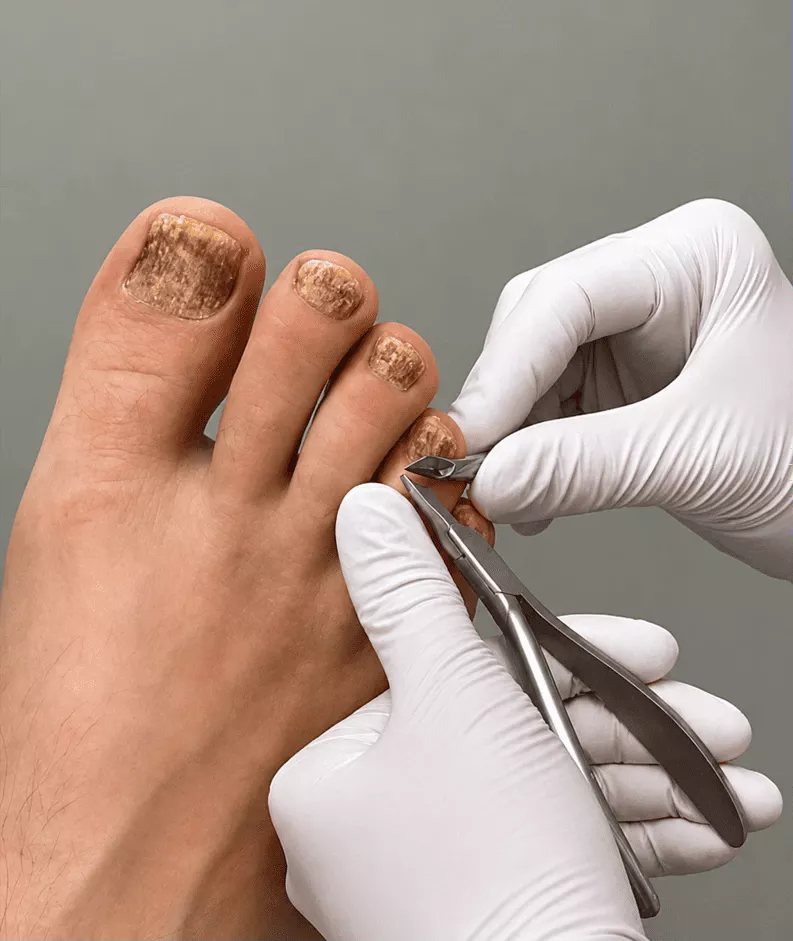
If you have thick, yellow, brittle, or crumbling toenails, you are likely dealing with toenail fungus — one of the most common, stubborn, and embarrassing foot conditions. Our Toenail Fungus Solution in Rockville, MD provides professional cosmetic mechanical clearance of damaged and fungal-affected nail tissue to restore the appearance of your feet and to make any anti-fungal treatment you are using actually work.
During the session, our certified specialists perform a meticulous, painless cleaning of the affected nail plate. We use advanced cooling spray e-file devices and sterile podology equipment to safely reduce the thickened keratin and clear away crumbling fungal debris. This cosmetic restoration improves the appearance of your nails immediately and opens a pathway so that topical anti-fungal products can finally reach the nail bed.
What Is Toenail Fungus?
Toenail fungus, known medically as onychomycosis, is a fungal infection of the nail plate caused most often by dermatophytes — microscopic fungi that feed on keratin (the protein your nails are made of). The fungus thrives in warm, dark, moist environments: closed shoes, gym showers, public pools, and damp socks are common sources.
Typical signs of toenail fungus include:
- • Thickening of the nail plate, often the big toe first
- • Yellow, brown, or whitish discoloration
- • Crumbling, brittle, or distorted nail edges
- • A faint unpleasant odor
- • Lifting of the nail from the nail bed
- • Mild pain or pressure inside closed shoes
Toenail fungus is medically diagnosed and treated by a licensed podiatrist or dermatologist. What we offer is the cosmetic side — the professional, painless reduction of the thick, crumbling, fungus-damaged nail bulk that makes your feet look and feel better, and that creates the conditions for medical treatment to actually be effective.
Our Cosmetic Nail Restoration Protocol
- Cosmetic clearance: Gentle mechanical removal of thickened, fungus-affected nail bulk.
- Painless spray tech: Cooling spray e-file device for a comfortable, painless experience.
- Hygienic care: Class B autoclaved tools and dust encapsulation to reduce cross-contamination.
- Visible improvement: Thinner, cleaner nails after the very first session.
The Restoration Process Step by Step
Visual Assessment
We assess the degree of nail damage and the depth of the fungal-affected areas to choose the right mechanical approach for each nail.
Painless Clearance
The specialist removes damaged, fungus-affected tissue using sterile e-file hardware. The built-in cooling spray ensures there is no heat or friction pain.
Restorative Finish
We apply professional podological serums that reach the cleaned nail bed to support healthy new nail growth from the matrix.
Why Creams and Lacquers Alone Fail
Many people spend months or years applying over-the-counter anti-fungal creams with no visible result. There is a real biological reason. Toenail fungus lives deep in the nail bed, feeding on keratin. As the infection progresses, the nail thickens and becomes porous, creating a dense shield that topical solutions simply cannot penetrate.
Why Cosmetic Clearance Changes the Game
Topical solutions cannot push through millimeters of infected keratin. Our specialized cosmetic clearance safely grinds down this thickened bulk and removes the infected, crumbling debris from beneath the nail plate.
By removing the "shield," we instantly improve the appearance of the nail and open a direct pathway. This allows your prescribed anti-fungal drops, lacquers, or oral medication to finally reach the active infection at the nail bed, dramatically increasing the chances of full restoration. This is why most podiatrists recommend mechanical debridement in combination with medical treatment.
Toenail Fungus Treatment Options Compared
When you start researching "best treatment for toenail fungus," you'll see five main categories. Here's how each one works, and where our cosmetic clearance fits into the picture.
OTC Topicals (creams, sprays, polishes)
Cheapest option, available at any pharmacy. Effective only on very mild surface fungus on thin nails. Almost never works on thick, advanced cases — they cannot penetrate the nail plate. Best as a maintenance step after mechanical clearance.
Prescription Topicals (ciclopirox, efinaconazole, tavaborole)
Stronger formulations prescribed by a podiatrist or dermatologist. Significantly more effective than OTC, but still limited by how deep they can penetrate. Results improve dramatically when combined with regular cosmetic debridement.
Oral Anti-Fungal Medication (terbinafine, itraconazole)
The medical gold standard for moderate-to-severe cases. Treats the fungus systemically over 3 months. Requires a prescription and periodic liver-function monitoring. Highly effective but not for everyone — consult a physician.
Laser Treatment for Toenail Fungus
Newer option offered by some podiatry offices. Uses targeted laser heat to inactivate fungus in the nail bed. Painless and drug-free, but typically expensive ($800–$1,500), requires multiple sessions, and results vary. Not covered by insurance.
Cosmetic Mechanical Clearance (our service)
Painless e-file reduction of thickened, fungus-damaged nail bulk. Restores appearance immediately and lets topical or oral medication actually work. Designed to complement, not replace, medical treatment. Most effective when scheduled every 4–5 weeks alongside an anti-fungal protocol from your physician.
When You Should See a Podiatrist Instead
Our service is cosmetic. There are situations where you should consult a licensed podiatrist or physician before a cosmetic appointment:
- You have diabetes, peripheral neuropathy, or compromised circulation.
- You see redness, swelling, pus, or pain — these are signs of bacterial infection.
- You are pregnant or breastfeeding and considering oral anti-fungal medication.
- The "fungus" appearance came on suddenly after trauma — it may be a hematoma rather than fungus.
- You want a confirmed lab diagnosis (KOH test or culture) before starting any treatment.
Advanced Painless Spray Technology
Working on compromised, fungal nails requires precision. Standard salon drills create friction that causes intense burning pain on sensitive nail beds. We exclusively use high-end European e-files equipped with integrated cooling spray systems.
- Zero heat spikes: Continuous micro-mist drops the temperature instantly. You feel no burning or pain.
- Dust encapsulation: The spray binds fungal dust to prevent airborne cross-contamination.
- Diabetic-friendly: No water basins, no aggressive blades. Safer for sensitive feet and circulation issues.
Related Foot Care Services
If you have toenail fungus, you may also benefit from one of our related cosmetic services:
Medi Pedicure (Specialized Foot Care)
For thickened nails and complex foot concerns beyond fungus alone.
Toenail Braces (Ingrown Nail Care)
Non-surgical correction for painful ingrown nails — often appears alongside fungus.
Cracked Heels Solution
Deep heel fissures often signal the same dry-skin conditions that allow fungus to thrive.
Wellness Pedicure
Waterless maintenance care once your fungal nails are restored.
Three Typical Cases We See Each Month
Composite examples drawn from common client patterns at our Rockville studio. Details are generalized — no real names or identifying information.
"I tried every cream for two years"
Yellow, thickened big toenails on both feet, plus a smaller affected nail on each side. Confirmed onychomycosis by his podiatrist; on prescribed efinaconazole for 14 months with minimal improvement. Came to us specifically for mechanical clearance because his physician told him the lacquer was not reaching the nail bed.
Path: initial session cleared roughly 60% of damaged keratin; follow-up sessions every 5 weeks. After 6 months, the efinaconazole finally penetrating fresh growth; new nail clear at the base, damaged section growing out. Expected full restoration: month 10–12.
"I caught it at the locker room"
Single affected big toenail with classic distal lateral discoloration. Mild thickening only — early stage. Picked up at a shared gym shower over 8 months prior, untreated until cosmetic appearance became noticeable.
Path: one initial mechanical clearance plus referral to her physician for OTC topical recommendation. Caught early enough that two follow-up sessions across 10 weeks restored appearance fully. Best case scenario — most early-stage clients see results faster than they expect.
"My podiatrist sent me here"
Multiple fungal-affected nails across both feet, well-controlled type 2 diabetes, mild peripheral neuropathy. Podiatrist had handled the diagnostic and prescription side but explicitly referred for safer waterless mechanical clearance — water-based pedicures are off the table for him.
Path: conservative protocol — shorter sessions, lighter passes, every 4 weeks. Coordinated communication with his podiatrist on progress. Focus is appearance maintenance plus reducing infection-risk surfaces; long-term partnership rather than "course of treatment."
Frequently Asked Questions
Is this a cure for toenail fungus?
Will my nail look completely normal after one session?
How much does toenail fungus treatment cost in Rockville?
Why do I need a follow-up within 5 weeks?
Do you offer laser treatment for toenail fungus?
Can I wear nail polish to hide the damage?
Is the service safe for diabetic clients?
Do you serve clients from Baltimore?
*Disclaimer: MedPedicure Center provides cosmetic foot care, aesthetic restoration, and general wellness services. We do not diagnose, treat, or cure medical conditions or diseases, including toenail fungus (onychomycosis). Clinical terms used on this page are for general informational context only. For a confirmed diagnosis, prescription anti-fungal medication, laser treatment, or any condition that may require medical intervention, please consult with a licensed podiatrist or physician.
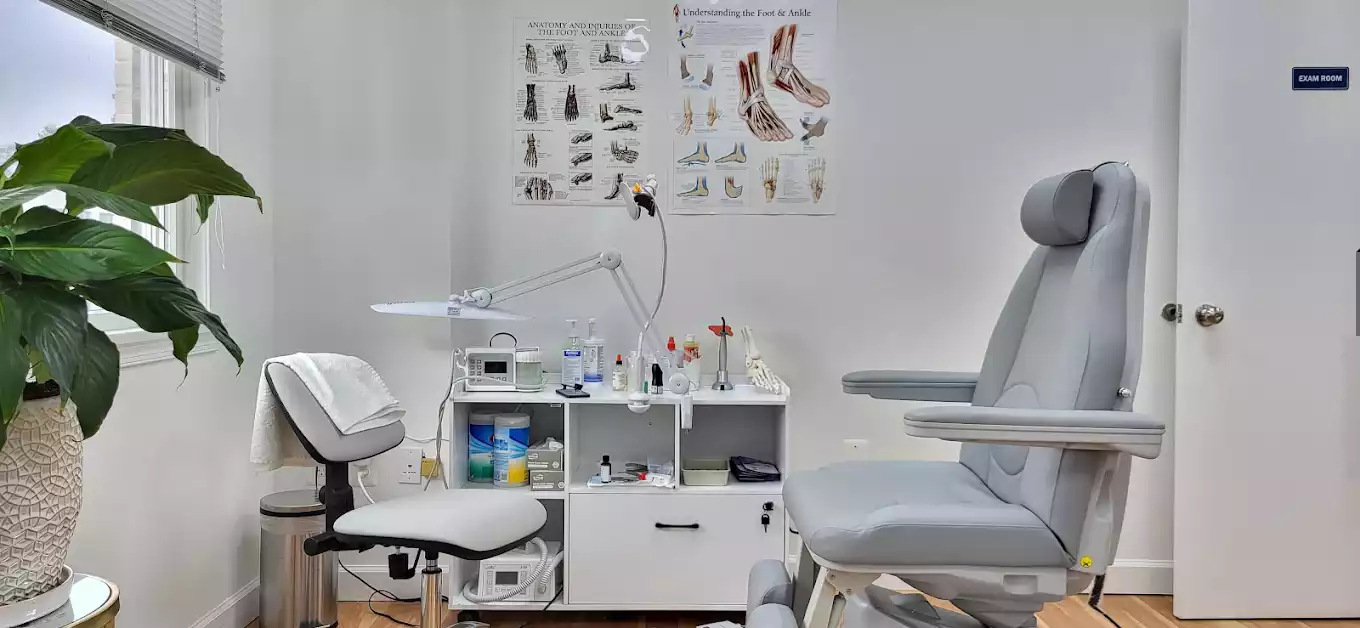
Initial Session
Follow-up Session
*Must be scheduled within 5 weeks of initial visit.
Visible improvement after the first session.