
Advanced Podology Consultation & Foot Assessment
Identify the Root Cause Before It Escalates
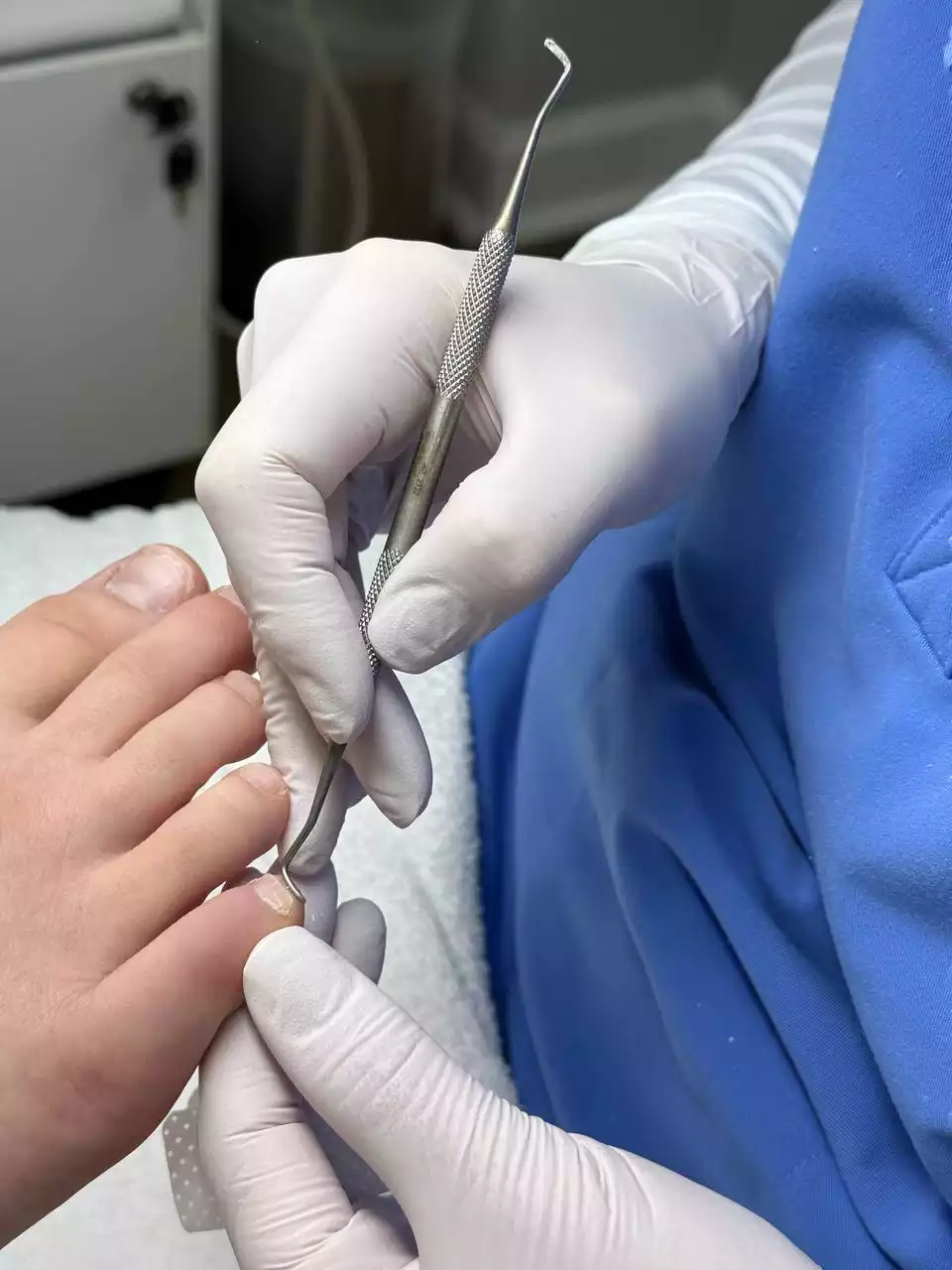
Effective restorative care starts with an accurate assessment. Foot pain, nail discoloration, or recurring calluses are often early signs of deeper podological issues. At our Rockville center, an initial podology consultation allows us to identify the exact cause of your discomfort and design a highly specialized care protocol.
During this session, we map out the structural integrity of your nails and skin. We don't just address surface symptoms; we evaluate the contributing factors. This detailed podological inspection guarantees that your follow-up care—whether it's advanced mechanical fungal clearance or corrective nail bracing—is perfectly aligned with your individual foot profile.
What to Expect During Your Evaluation:
- Nail Health Screening: Detection of early-stage nail discoloration issues.
- Pressure Mapping: Identification of core calluses and corns.
- Ingrown Assessment: Evaluation of nail plate curvature risks.
- Custom Blueprint: A step-by-step restorative podology plan.
Our Three-Step Podology Process

Health & Foot Care History
We analyze your daily routine, previous care habits, and specific discomfort points to establish essential context for your evaluation.
Detailed Podological Inspection
Using professional lighting and specialized tools, we meticulously inspect hidden fissures, micro-traumas, and nail integrity without any pain.
Actionable Restoration Strategy
You leave with a clear understanding of your condition and the exact MedPedicure protocols required to restore your feet.
Recognizing the Warning Signs: Who Needs an Assessment?
Many foot conditions develop silently. What seems like a minor cosmetic issue—such as a slightly thickened toenail or a stubborn patch of dry skin—can often mask an underlying structural or dermatological problem. You should book a comprehensive foot assessment in our Rockville clinic if you experience any of the following:
Nail Discoloration or Thickening
Yellowing, brittleness, or lifting of the nail plate, which require clinical evaluation before applying any restorative techniques.
Diabetic Foot Concerns
Diabetic neuropathy reduces foot sensation. Routine professional assessments are critical to prevent unnoticeable micro-traumas.
Recurring Calluses & Corns
Skin buildup often indicates abnormal pressure distribution while walking or wearing improper footwear.
Pinch or Pain in Nail Folds
Early signs of involuted or ingrown toenails that cause discomfort when wearing closed-toe shoes.
Uncompromising Safety & Clinical Sterilization
When dealing with compromised nails or skin barriers, hygiene is non-negotiable. Unlike traditional nail salons, our podology practice operates under strict clinical standards to guarantee 100% cross-contamination prevention.
-
Medical-Grade Autoclaving
All metal instruments undergo rigorous ultrasonic cleaning followed by high-pressure steam sterilization in a Class B medical autoclave, destroying 99.99% of all pathogens.
-
Single-Use Pouches
Sterilized tools are sealed in specialized indicator pouches that are only opened in front of you at the beginning of your consultation.
-
Disposable Materials
Files, buffers, and all non-metal components are strictly single-use and disposed of immediately after your session.
How a Cosmetic Podology Consultation Differs From a Podiatrist Visit
A podiatrist is a doctor of podiatric medicine (DPM) — diagnoses disease, prescribes drugs, performs surgery. Our consultation is the cosmetic-restorative equivalent — we identify what is treatable on the appearance and comfort side, what is outside our scope, and where to send you for that. Different mandates, complementary roles.
Podiatrist Visit
- • Medical diagnosis (KOH test, biopsy, X-ray)
- • Prescription medication
- • Surgical intervention
- • Ulcer / wound management
- • Sports-injury treatment
- • Usually covered by insurance
- • Visit length: 15–30 min
Our Podology Consultation
- • Visual + tactile assessment of feet
- • Identification of cosmetic-side issues
- • Honest scope check: us, podiatrist, or both
- • Recommended service path with realistic timelines
- • Pricing transparency upfront
- • Self-pay, no insurance involvement
- • Visit length: 30–45 min
If during the consultation we see anything outside our cosmetic scope — suspected infection, suspicious skin lesion, persistent pain, ulceration — we will tell you directly and recommend a podiatrist before any cosmetic work. We do not treat what we cannot ethically treat.
Smart Questions to Ask Before Booking Any Foot-Care Provider
Whether you book with us or anywhere else, ask these. The answers tell you a lot about whether the provider takes your feet seriously.
"Is your protocol waterless?"
A "yes" eliminates the biggest infection-vector risk in pedicure services. A "no, we use a basin" should make you cautious if you have diabetes, neuropathy, or any compromised healing.
"How do you sterilize instruments?"
Acceptable answers mention an autoclave (ideally Class B). UV cabinets and chemical soaking are not equivalent. Anyone vague on this question is a red flag.
"Do you use blades for callus removal?"
"Yes" — fine for healthy feet, but a hard no if you are diabetic or have neuropathy. An e-file with cooling spray is the safer alternative we use.
"What is outside your scope?"
Honest providers have a clear answer. Anyone who says "we handle everything" is either uninformed or selling. Cosmetic foot care has real limits — ulcers, infections, suspicious lesions belong with a physician.
"Will you tell me if I should see someone else?"
The answer should be yes, with examples. We refer roughly 1 in 8 consultation clients out to a podiatrist before doing any cosmetic work. That is normal and is the sign of a provider you can trust.
Top 5 Conditions Identified at Consultations
What we actually see at first visits, by frequency. Many clients arrive thinking they have one problem and learn during assessment that the real issue is different — or that they have a stack of smaller issues compounding.
Onychomycosis (toenail fungus)
Almost always missed or dismissed by the client as "just thick nails." We identify the pattern and refer to a podiatrist for a confirmed diagnosis before starting cosmetic clearance.
Hyperkeratotic calluses & corns
Often dismissed as cosmetic, but they signal a footwear or gait issue. We identify the pressure pattern so we can address the cause, not just the symptom.
Chronic or recurrent ingrown nails
Frequently from prior salon "corner cutting." Solution path: corrective bracing for the recurrent cases, technique correction for one-offs.
Cracked heels & fissures
Stage 2–3 fissures masquerading as "just dry feet." We identify severity and lay out a realistic restoration timeline.
Suspicious findings → physician referral
Possible psoriasis, suspected diabetes complications, unusual pigmentation, persistent pain. We do not treat — we tell you clearly and recommend the right specialist.
Numbers reflect approximate consultation distribution across recent months. A single client often presents with 2–3 of these simultaneously.
Frequently Asked Questions
Do I need to remove my nail polish before the assessment?
Does the consultation include a pedicure?
Is the foot assessment painful?
Do you serve clients from Baltimore?
*Safe for diabetic clients. Fast Vagaro confirmation.